
The cost of electricity is rising. The number of appliances needed for a daily household has multiplied, which is why the percentage of monthly electric expenses has grown manifold.
As we deplete the fossil reserves, the cost of the resources generated from fossils will increase.
But there’s always a way. Many people are going with solar energy. This renewable energy source can significantly reduce your electricity cost or even get you some money. Solar power allows you to run some of your electrical appliances easily. With a time investment, you can save up to 25 years by installing solar panels. In today’s article, we will discuss how much we can save from solar panels.
How Will Solar Save Me Money?
Reduced Reliance On The Grid: When using solar power, you automatically use less electricity from the traditional power grid. It will eventually reduce your electricity bill.
Stable Energy Costs: Regardless of the fluctuating electricity prices, solar power offers a consistent and predictable energy source. This stability can provide a sense of security, helping you avoid the impact of the increasing electricity costs.
Financial Incentives: Many government and corporate organizations offer subsidies, tax credits, or rebates to encourage solar panel use. This can significantly reduce the cost of installing solar panels.
How Much Can I Expect To Save From Solar?
It isn’t easy to calculate how much you will save. Still, we can estimate the amount based on the solar panel’s power or your electricity. Let’s make an estimated calculation –
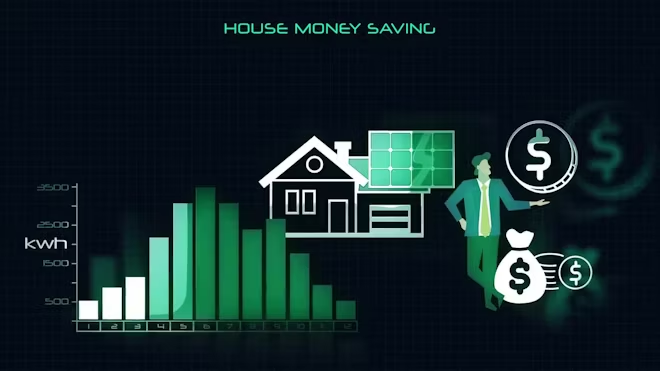
Basically, for households, the 5kW solar panel systems are suitable. The owner can upgrade or extend it. As an assumption, A 1kW system can generate 4kWh electricity in a day, so mathematically, a 5kW system can generate 20kWh electricity in a day and 600kWh electricity in a month. This 600kWh you can receive from only sunlight.
The USA’s average residential tariff for electricity is 17.16 cents per kW. As per this, you can save up to 600 kWh * 17.16 cents = $103 monthly. If your electric bill is around $200, you have to pay around $97; if your electric bill is around $150, you have to pay $47; if your electric bill is around $103, you don’t have to pay any electricity bills. The tariff can be different depending on your location. If your location’s tariff is higher, you save more; if it is lower, you save less.
You can also earn money from solar power. Suppose your electricity bill is $70, and your solar panel generates electricity worth $103. Then, you can earn $33 from the distribution licensee ( DISCOM ). The only condition for earning money from solar power is installing a rooftop solar panel with a net metering system. Net metering is a billing system that compensates consumers for the extra power generated at a state-determined price. Net metering technology is vital to selling the additional energy generated from your solar panel to the grid and getting paid for it in return.
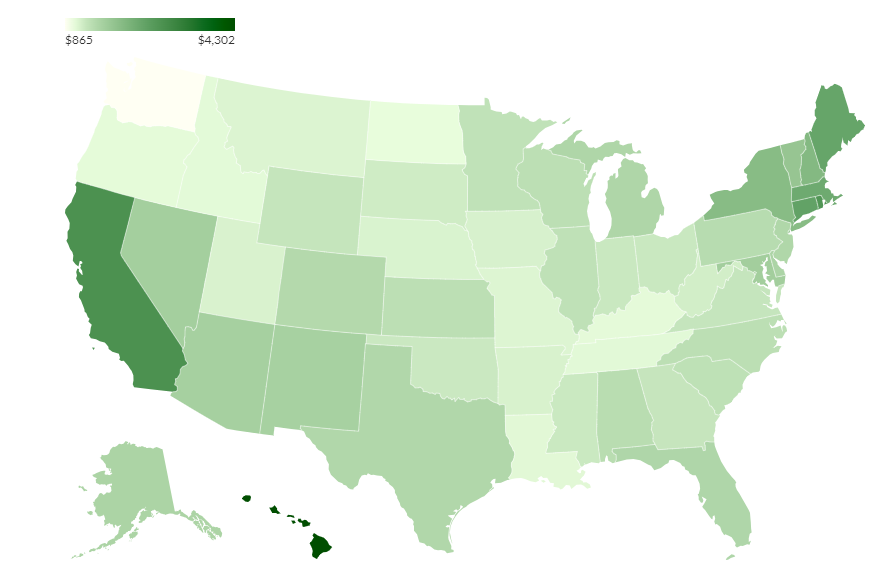
Solar Panels Savings by State
How Long Will It Take To Get Returns On My Solar Investment, and What Percentage Will I Get?
Okay, let’s analyze solar power’s return on investment (ROI) in the USA. We will get all the answers by calculating the ROI.
Calculate The Total Cost: The total upfront cost of the solar system includes the price of equipment and labor, permits, inspections, taxes, and other fees. For example, the total initial cost of the system is $24,000.
Apply The Tax Credits And Other Incentives: Apply for the federal tax credits on solar systems. Most homeowners in the USA are eligible for the 30% federal tax credit, which can significantly reduce the system’s initial cost. With this incentive applied, you have to pay –
$24,000 – ( $24,000 * 30% ) = $24,000 – $7,200 = $16,800
Calculate The Annual Energy Cost: You can use your current utility bills to calculate the yearly energy cost. You can also calculate this cost by using the average electricity rate in your area. Okay, now suppose you are saving $125 per month for electricity. That means you are saving $1,500 in a year. It is your annual energy cost.
Calculate The Solar Payback Period: Divide your initial investment by your annual energy cost in this step. The result will be the period or the number of years it will take to match your initial investment. After that, you are going to make some profit. For example, your initial investment of $16,800 is divided by your annual energy cost of $1,500. As a result, it will take nearly 11 years to match your initial investment. So, your solar payback period will be 11 years.
Calculate The Overall Savings: A solar panel typically has a lifespan of 25 years. You can estimate your lifetime savings by subtracting the solar payback period from this 25-year lifespan and multiplying the result by your annual energy cost. This long-term savings potential can provide reassurance and confidence in investing in solar power. For example, 25 years – 11 years = 14 years.
Lifetime Savings = 14 * $1,500 = $21,000
Calculate the Solar Return On Investment (ROI): In this step, you can calculate the ROI of your solar system. First, subtract the initial investment from your lifetime savings from solar. The result is your ROI. If you want an ROI percentage, then divide the ROI by your initial investment and later multiply it by 100. The result is the ROI percentage.
As an example, $21,000 (lifetime savings) – $16,800 (initial cost) = $4,200 (ROI)
ROI percentage = $4,200 / $16,800 = 0.25 * 100 = 25%.
The average ROI in the USA is 10%, so solar can also be a good investment option.
How Much Do I Have To Invest In Solar Power?
There are two major expenses for going solar: 1. Installing Solar Power and 2. Maintaining Solar Power.
Cost Of Installing Solar Power
The cost of installing solar basically depends on several factors –
- System Size: The size of the solar panels is measured in kilowatts ( kW ). It indicates how much energy it can generate. Larger solar systems mean the solar panels that are higher in kilowatts are more costly. Still, they can create more energy savings in the long run.
- Equipment Costs: Many companies manufacture solar system equipment. The cost of the solar panel, inverter, mounting system, and other components can differ based on brand, efficiency, and quality.
- Labor Costs: Installation labor costs can vary depending on your location, solar system, and the complexity of your roof.
- Local Incentives: Many governments and corporate organizations offer tax credits, rebates, subsidies, loans, schemes, and other incentives that can help reduce the upfront costs of installing solar panels.
- Roofing Condition: If your roof is not in good condition, install or mount a solar panel, then repair your roof first. It will significantly cost you some price.
- Permitting Costs: Obtaining permits for solar installation from the local authorities might charge you some fees.
The average cost of installing solar panels in the USA: $9200 to $28,000 for a 3kW – 8kW system.
Here is a quick inspection of the cost of installing a 6 kW solar system. This can be used for a regular 4-person household.
| Components | Price (6kW) |
| Panels | $4,200 – $6,000 |
| Inverter | $1,800 – $3,000 |
| Mounting and Racking | $600 – $1,800 |
| Balance of Systems (BOS) – wiring, fuse boxes, and switches | $600 – $1,200 |
| Battery Storage (optional) | $4,000 – $7,500 |
| Installation labor | $3,000 – $6,000 |
| Permitting | $300 – $1,000 |
Cost Of Maintaining Solar Power
Solar panels don’t require too much maintenance. They are built so that they can stand in tough weather conditions. They generally last for 20 – 25 years. Here are some factors that can extend their validity and power.
- Routine Cleaning: After every 1 year, you can clean the dust or other wastes from the panels, or you can hire a professional to do this. While most of the work is done by rain occasionally or seasonally.
- Minor Repairs: Over time, some components, like inverters or connected wires or panels, might need minor repairs or replacement. The cost of this repair or replacement depends on how big the replacement or repair is.
- Monitoring: Most solar systems come with a monitoring system. You can track the performance of your solar panel by the monitoring system. Some companies offer this system with a subscription fee, while some are included in the initial cost.
Here is the cost of maintenance and some minor repairs –
| Maintenance | Price |
| Cleaning the panels | $150 – $300 per cleaning |
| Inspection | $150 – $300 per inspection |
| Monitoring System | $120 – $240 annually |
| Repairs | Price |
| Inverter replacement | $2,000 – $4,000 |
| Wiring replacement | $100 – $500 |
| Panel replacement | $300 – $700 |
Minor Repair Costs Of Some Companies
- Tesla Solar: $100 – $500 for minor issues. $1,500 -$3,000 for inverter replacement.
- SunPower: $200 – $400 for panel replacement. Annual maintenance cost is around $300 – $500.
- Vivint Solar: Inspection cost is $150 – $250 and cleaning cost is $150 – $300.
- SolarCity: Monitoring services cost is around $120 – $240
What Are The Factors That Will Affect My Solar Savings?
The savings from solar power also depend on several factors –
Location: If you reside in a place where the cost of electricity is higher and has plenty of daytime, you will save more.
Energy Use: If you are a high electricity user, having a solar power generation system will be beneficial.
Solar Power System: The bigger your solar panels are, the more your savings will be. However, the installation or other costs will be higher if your solar panels are big or larger in numbers.
Government Incentives: The government offers tax credits and rebates for solar panel installation. It will significantly reduce your upfront cost.
Government Initiatives For Supporting Solar Power In The USA
- Investment Tax Credit: This federal initiative can deduct 30% of the solar system installation cost in homes or businesses. This initiative will be the same upto 2032; after that, the percentage will be reduced.
- Solar Energies Technologies Office (SETO) is part of the Department of Energy, USA. It funds research and development to make solar energy reliable and efficient for the country’s people.
- Clean Energy Investment Fund: This incentive supports renewable energy projects and provides financial help for private sector investment in solar energy technologies.
- Green Power Partnership: It supports the use of sustainable energy. It assists in technical components and recognizes the organizations supporting renewable energy sources.
Some state-level initiatives support solar power in the USA, such as Renewable Portfolio Standards (RPS), Net Metering initiatives, State Tax Credits and Rebates, Property Assessed Clean Energy (PACE) Financing, Solar Renewable Energy Certificates (SRECs), etc.
Best Solar Companies in the USA
SunPower: This company provides a mobile app to monitor the solar system in real-time. The panels are the most productive in the market and have an efficiency of 23%. It is available in all 50 states in the USA. It also offers a 25-year warranty on solar systems and financing and leasing options.
Tesla: Tesla is a very popular name in the technical industry. They have a competitive price for solar systems. They offer solar roofing systems that replace traditional roofs. However, they don’t have a dedicated solar systems shop. Consumers must pick a third-party installer to install Tesla solar systems in their homes or businesses. The warranty period of this company is 10 years.
Blue Raven Solar: Blue Raven Solar is a popular solar company because of its financing options and refer-a-friend program. The customers will receive 18 months of free solar power if they lease this company’s solar system. Customers can also earn $500 – $1,500 if they refer someone. However, there are some drawbacks, such as this company providing services in just 21 states in the USA, they don’t have any mobile tracking service to monitor your solar system, and their warranty period is just 10 years.
Palmetto Solar: Another private organization famous for designing, installing, and maintaining the solar system. It is available in 19 states in the USA. This company offers an app that monitors the solar system. However, the app can only be run with a monthly subscription, which can be considered a drawback.
Which U.S. State Has The Best Discounts On Buying Solar?
Here are the 5 states that have the best discounts on buying and maintaining solar :
| State | Federal Tax Credit | State Incentives | Property Tax Exemptions | Sales Tax Exemptions | Additional Incentives |
| California | 30% | Self Generation Incentive Program | No property Tax | No sales tax | Disadvantaged communities – Single Family Solar Homes |
| New York | 30% | NY- Sun Megawatt Block Program (25%) | No property Tax | No sales tax | N/A |
| Rhode Island | 30% | Net Metering | No property Tax | No sales tax | Renewable Energy Growth Program |
| Maryland | 30% | Residential Clean Energy Rebate Program (30%) | No property Tax | No sales tax | Solar Renewable Energy Credits |
| Oregon | 30% | Solar + Storage Rebate program , Solar Within Reach | No property Tax | No sales tax | N/A |
So, Should You Go Solar?
Solar power offers a future-proofing promise for our homes and businesses. Here’s the reason –
Increasing Energy Costs: Fossil fuels are a limited resource. The energy costs from these sources tend to rise over time. Solar panels help combat these rising costs by generating clean and free electricity.
Government Support: The Indian government is actively promoting the use of solar energy. They offer loans, subsidies, tax credits, rebates, and schemes to make solar power a more attractive option.
Environmental Benefits: Using solar energy is very beneficial to our environment. Burning fossil fuels releases greenhouse gases into our atmosphere, which is very harmful. By switching to solar, the reliance on fossil fuels will be reduced. This is very important for the sustainability of our world.
Increased Property Value: It is quite observable that homes with solar power systems have greater market value than those without.
Future-Proof Investment: Generally, solar panels last 20 – 25 years, making them long-term investments. As the cost of traditional energy sources is rising and the demand for solar power is growing daily, solar systems will likely become even more valuable.
At present, solar power is the cleanest, reliable, and affordable way to generate electricity. It can significantly reduce your electricity costs and environmental impacts. It also can be a new source of earnings. Solar power is becoming popular and acceptable daily because of its nearly zero maintenance technology and long-lasting life. With government initiatives and technological advancements, solar is a promising solution for the future.
Frequently Asked Questions About Solar Power Finances
How does a solar panel work?
Solar panels use photovoltaic cells to convert sunlight directly into electricity. They are silent, require minimal maintenance, and last for decades.
Does solar power work in cloudy weather?
Yes, solar panels can still generate electricity on cloudy days. Although the efficiency will be reduced in the foggy weather.
What are the different types of solar power systems?
There are two types of solar systems – grid-tied and off-grid systems. The grid-tied systems are connected to the utility grid for backup power. In contrast, the off-grid systems are standalone and require battery storage.
 ShahAwaaz